Breath Holding, Raw Cacao, and Stem Cells: Separating the Evidence From the Hype
I originally wrote this article claiming breath holding and raw cacao work together to activate your stem cells. I went back and checked the sources. Most of it did not hold up, so here is the corrected version — including what the research genuinely shows.

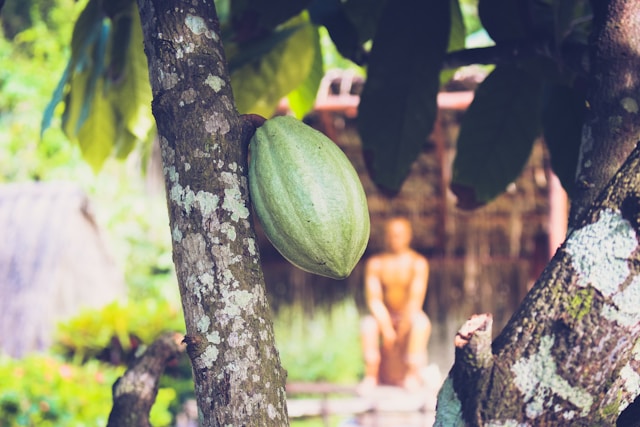
I wrote the first version of this article on the strength of things I had heard in wellness circles rather than things I had read in journals. When I went back through it looking for actual citations, a lot of it did not hold up. Rather than quietly delete the post, I would rather show you the corrected version — including which of my own claims I had to throw out.
What I got wrong
Three things from the original article have no support I could find and are now removed:
- "Groundbreaking 2024 research shows raw cacao activates stem cells." I could not find this research. I do not think it exists. I should not have written it.
- "Breath holding awakens dormant stem cells in your bone marrow and releases them into the bloodstream." There is animal work on hypoxia and stem cell mobilisation, but nothing showing this in humans doing voluntary breath holds.
- "The two practices work synergistically for stem cell activation." No one has tested this combination. A synergy claim needs a study of the combination, and there isn't one.
I have also dropped the weight-management, skin-health, and longevity claims about cacao. They were speculation dressed as findings.
What the research actually shows about cocoa
Two things here are genuinely well evidenced, and one is interesting but narrow.
Blood pressure: real, and small. A Cochrane review pooling 40 treatment comparisons across 1,804 participants found flavanol-rich cocoa lowered systolic and diastolic blood pressure by about 1.8 mmHg each — statistically significant, moderate-quality evidence, and honestly a modest effect. A larger meta-analysis of 145 randomised trials covering 5,205 participants found similar numbers, with bigger effects in people whose blood pressure was already elevated. Worth noting: the Cochrane authors attributed this to flavanols and could not evaluate theobromine's contribution, because most trials did not report theobromine content. So the "theobromine lowers your blood pressure" line I used before is not what the evidence says.
Cell mobilisation: one small trial, and it is not what "stem cell activation" sounds like. There is a real study behind the stem cell talk. A randomised, double-masked, crossover trial in 16 patients with coronary artery disease compared 30 days of high-flavanol cocoa (375 mg twice daily) against a matched low-flavanol drink. Flow-mediated dilation improved 47%, systolic blood pressure fell about 4.2 mmHg, and the count of CD34+/KDR+ circulating angiogenic cells rose 2.2-fold.
That is a legitimate result and it is the closest thing to the claim I was making. But be precise about what it is: sixteen cardiac patients, a specific class of vascular repair cell, a surrogate marker rather than a health outcome, and no evidence about tissue regeneration anywhere else in the body. It is not a licence to say cacao regenerates you.
Cacao is also a genuinely good source of magnesium and iron, and it is calorie-dense and caffeinated. Both of those are just facts about the food.
What the research actually shows about breath holding
Hypoxia-inducible factor is real physiology, but the human breath-hold evidence is thin. HIF is the transcription factor complex that lets cells respond to low oxygen; under normoxia HIF-α is degraded, under hypoxia it accumulates and switches on genes including EPO and VEGF. That much is textbook. Whether a few minutes of voluntary apnea moves HIF enough to matter has, as one review of apnea and exercise performance put it, never actually been evaluated.
EPO does rise after hard apnea, in people who get properly hypoxic. This is the best-evidenced piece. A controlled study split participants into elite breath-hold divers, non-divers, and controls. After five maximal dynamic apneas, serum EPO rose 60% at 30 minutes and 63% at 180 minutes — but only in the elite divers, who reached mean end-apnea SpO₂ of 62%. Non-divers showed no significant change, and static apneas produced no change in either group. Peak EPO correlated with how low SpO₂ went (r = −0.49, p = 0.003). An earlier study in 17 competing freedivers found a smaller EPO rise three hours after combined static and dynamic apnea, alongside a rise in neuron-specific enolase — a marker suggesting neural tissue was affected by the hypoxia.
Read that last part carefully, because it cuts against the wellness framing. The response scales with how hypoxic you get, which means chasing it means chasing hypoxia, which is the thing that kills freedivers. This is not a benefit you should be pursuing.
Stem cells specifically: the mechanistic link runs through animal work. In rats, continuous hypoxia mobilised mesenchymal stem cells into peripheral blood, and blocking HIF-1α sharply reduced that mobilisation. That is a rodent model of sustained hypoxia, not a human doing breath holds on the sofa. I am citing it so you can see where the idea came from, not as evidence that it happens in you.
The honest bottom line
Cocoa flavanols have a small, replicated blood-pressure effect and one small trial showing mobilisation of vascular repair cells in cardiac patients. Breath holding produces a hypoxic stimulus that raises EPO in elite divers who get very hypoxic. Nobody has studied the two together, and I am not going to pretend otherwise.
If you want to drink cacao before training because you enjoy it, that is a perfectly good reason. Just do not think of it as a supplement stack for regeneration.
Safety
This is the part I do not soften.
- Never hold your breath in or near water alone. Hypoxic blackout gives no warning and is silent. You need a trained buddy who understands freediving rescue, in the water with you, every time.
- Never hyperventilate before a hold. Over-breathing drops CO₂ and delays the urge to breathe without adding meaningful oxygen. It removes the warning, not the danger. This is the mechanism behind shallow-water blackout.
- Do not chase deep desaturation. The EPO findings above came from elite athletes hitting SpO₂ in the 60s under supervision. That is a research setting, not a training goal.
- Practise dry holds seated or lying down where you cannot fall or hit your head.
- Cacao is calorie-dense and contains caffeine and theobromine. High theobromine intakes have been associated with nausea, vomiting, dizziness, and diarrhoea in trials.
- Talk to a doctor before starting either practice if you have cardiovascular, respiratory, or neurological conditions, or if you are pregnant.
The full breath-hold safety guide covers this properly.
Sources
- Effect of cocoa on blood pressure, Cochrane Database of Systematic Reviews (2017)
- Impact of flavan-3-ols on blood pressure and endothelial function in diverse populations: a systematic review and meta-analysis of randomized controlled trials, European Journal of Preventive Cardiology
- Improvement of endothelial function with dietary flavanols is associated with mobilization of circulating angiogenic cells in patients with coronary artery disease, JACC (2010)
- Erythropoietic responses to a series of repeated maximal dynamic and static apnoeas in elite and non-breath-hold divers, Eur J Appl Physiol (2019)
- Release of erythropoietin and neuron-specific enolase after breath holding in competing free divers, Scand J Med Sci Sports (2015)
- Apnoea as a novel method to improve exercise performance: a current state of the literature, Experimental Physiology
- Hypoxia-Inducible Factor-1α Is Essential for Hypoxia-Induced Mesenchymal Stem Cell Mobilization into the Peripheral Blood, Stem Cells and Development — rat model
- Divers Alert Network: Hypoxia in Breath-Hold Diving
- Divers Alert Network: Freediving Safety
Continue Reading
Why You Shouldn't Rush to Hold Your Breath for 5 Minutes in One Month
Why a five-minute breath hold in one month is the wrong target, and how to structure safer, repeatable dry-land practice.
How to Increase Your Breath Hold Time: A Beginner's Guide
If you're just starting out with breath-holding, there's one thing you need to understand first: It's not about oxygen. It's not about willpower. It's about CO₂. Learn the proper foundation for safe and effective breath hold training.

How to Avoid Ear Infections After Freediving: What the Evidence Says About Vinegar, Alcohol, and Olive Oil
If you spend a lot of time in the water you have probably dealt with swimmer's ear. Here is what actually helped me and my students, what the published research does and does not show, and where my original advice was wrong.
Train Your Breath Hold
Download BreathHold to build apnea tables, follow guided dry-land sessions, and keep your training history.